

Four full-size, free clinical infographics on hyperkalemia in adults: causes, pathophysiology, ECG changes, treatment by serum K⁺ level, drug doses, dialysis and follow-up. Original EmergMemo.com graphics with references to UK Kidney Association (July 2026 update), ERC/RCUK 2025 and BMJ 2026.
Versione italiana: Iperkaliemia — cause, ECG e terapia
1. Causes and pathophysiology

Most potassium is intracellular. A rise in serum K⁺ occurs with impaired renal elimination (AKI/CKD, hypoaldosteronism), extracellular redistribution (insulin deficiency, hyperosmolality, mineral acidosis, rhabdomyolysis, tumor lysis) and medications (ACE inhibitors, ARBs, MRAs, potassium-sparing diuretics, trimethoprim, NSAIDs, heparin), particularly in patients with reduced renal function. Consider pseudohyperkalemia due to sample hemolysis or extreme cellular counts, but do not delay life-saving treatment when ECG toxicity is suspected.
2. ECG patterns and risk
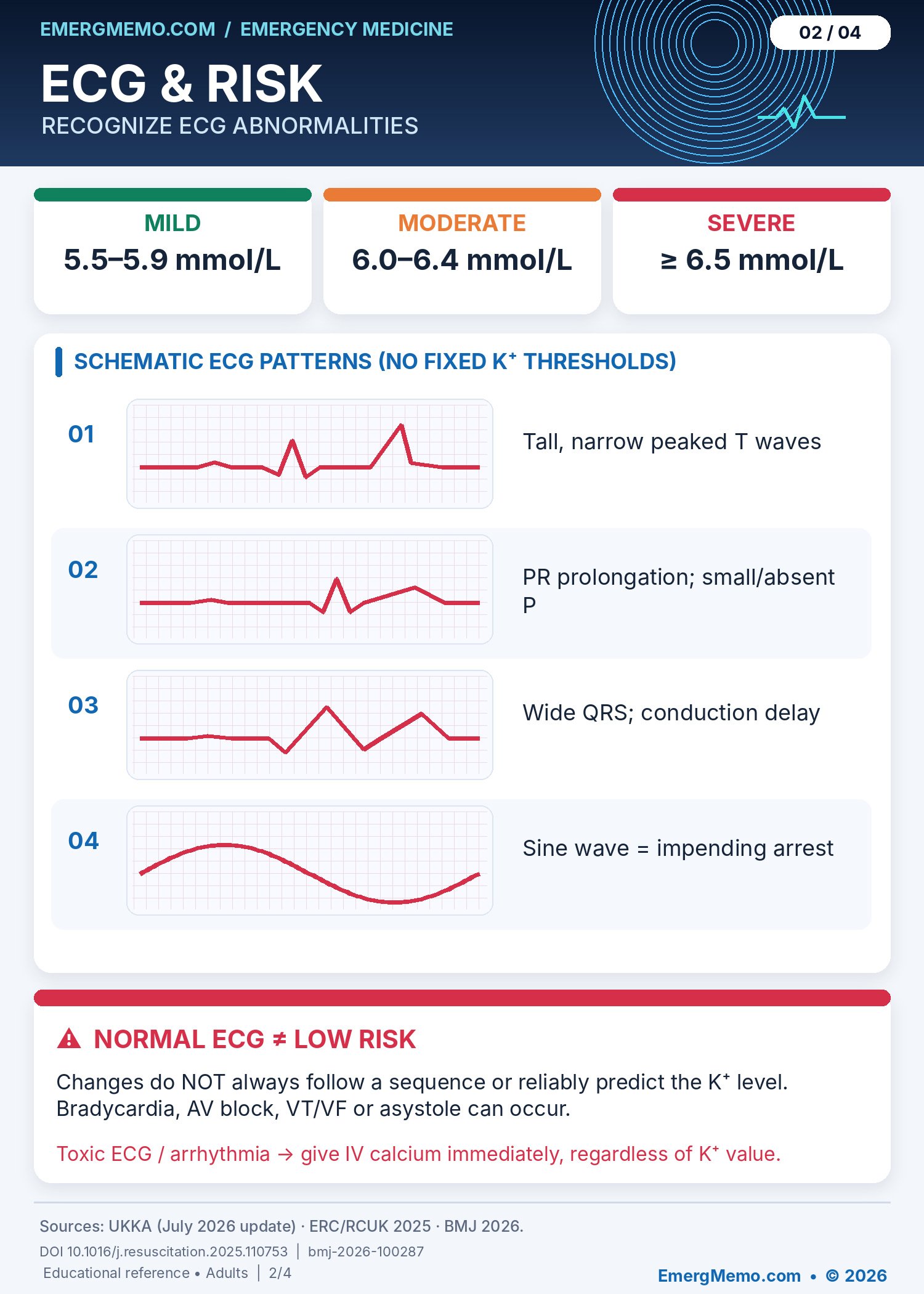
UKKA adult categories: mild K⁺ 5.5–5.9 mmol/L; moderate 6.0–6.4 mmol/L; severe ≥6.5 mmol/L. Possible ECG features include tall peaked T waves, PR prolongation, P-wave flattening/disappearance, QRS widening, bradycardia and a sine-wave pattern; VT/VF/asystole can follow. These ECG patterns do not necessarily occur in a fixed order and correlate poorly with the exact K⁺ level. A normal ECG does not rule out dangerous hyperkalemia.
3. Treatment by potassium range
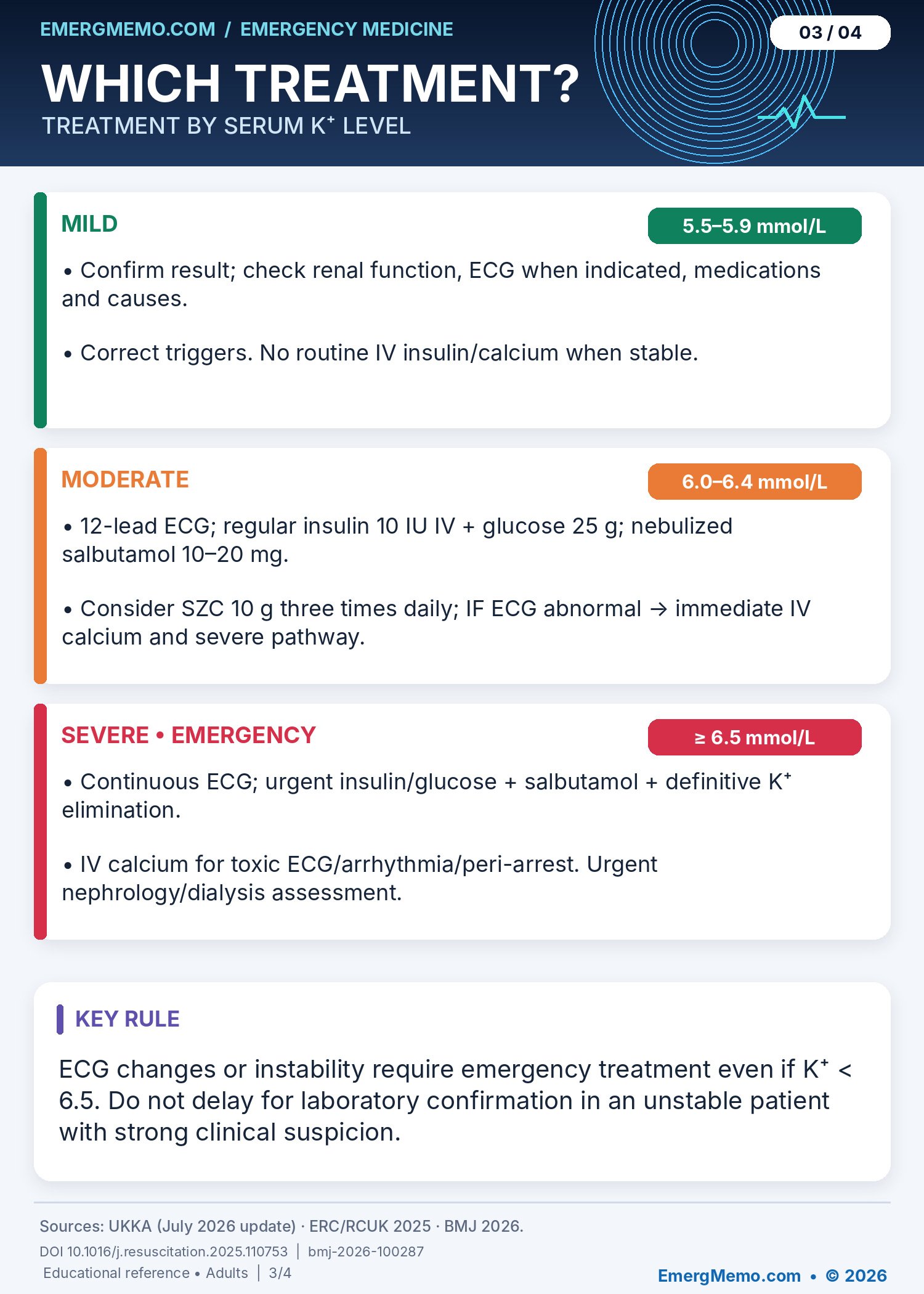
K⁺ 5.5–5.9 mmol/L: verify the result, assess renal function, identify and correct triggers, review medications. K⁺ 6.0–6.4: obtain a 12-lead ECG; IV regular insulin/glucose and nebulized salbutamol according to severity and local protocol, with consideration of a potassium binder. If ECG changes occur, give IV calcium immediately. K⁺ ≥6.5: emergency care with continuous ECG monitoring, urgent temporizing and elimination therapy, and nephrology/dialysis evaluation. Arrhythmia, instability or toxic ECG changes take priority over the absolute K⁺ level.
4. Emergency doses, monitoring and definitive elimination

Cardiac stabilization when ECG is toxic: calcium gluconate 10%, 30 mL IV over 10 minutes, or calcium chloride 10%, 10 mL IV over 5 minutes in peri-arrest (central access preferred). Reassess ECG and repeat if necessary. Calcium does not lower serum potassium.
Intracellular redistribution: regular insulin 10 IU IV with 25 g glucose over 15–30 minutes; add nebulized salbutamol 10–20 mg as an adjunct, not as monotherapy. If pre-treatment blood glucose is <7 mmol/L (126 mg/dL), give an additional 10% glucose infusion at 50 mL/h for 5 hours per ERC/UKKA. Monitor carefully for hypoglycemia, especially with kidney dysfunction.
Potassium removal: sodium zirconium cyclosilicate (SZC) 10 g orally three times daily for up to 72 hours when indicated; loop diuretics only when diuresis and volume status permit. Urgent dialysis is required for refractory/recurrent severe hyperkalemia or significant renal failure/anuria, especially in dialysis-dependent patients.
Monitoring: repeat K⁺ at about 1, 2, 4, 6 and 24 hours as clinically indicated; check glucose frequently for at least 6 hours after insulin. IV bicarbonate is not routine for hyperkalemia outside cardiac arrest; consider it in selected severe metabolic acidosis. ERC 2025 recommends 50 mmol in cardiac arrest attributable to hyperkalemia.
References and educational disclaimer
UK Kidney Association — Management of Hyperkalaemia in Adults (July 2026 update); ERC / Resuscitation Council UK 2025 — Special Circumstances; BMJ 2026 — Diagnosis and management of acute hyperkalaemia.
Educational reference for healthcare professionals, produced with AI assistance and reviewed against scientific sources. Use local protocols, clinical judgment and specialist support. Adult doses only.