

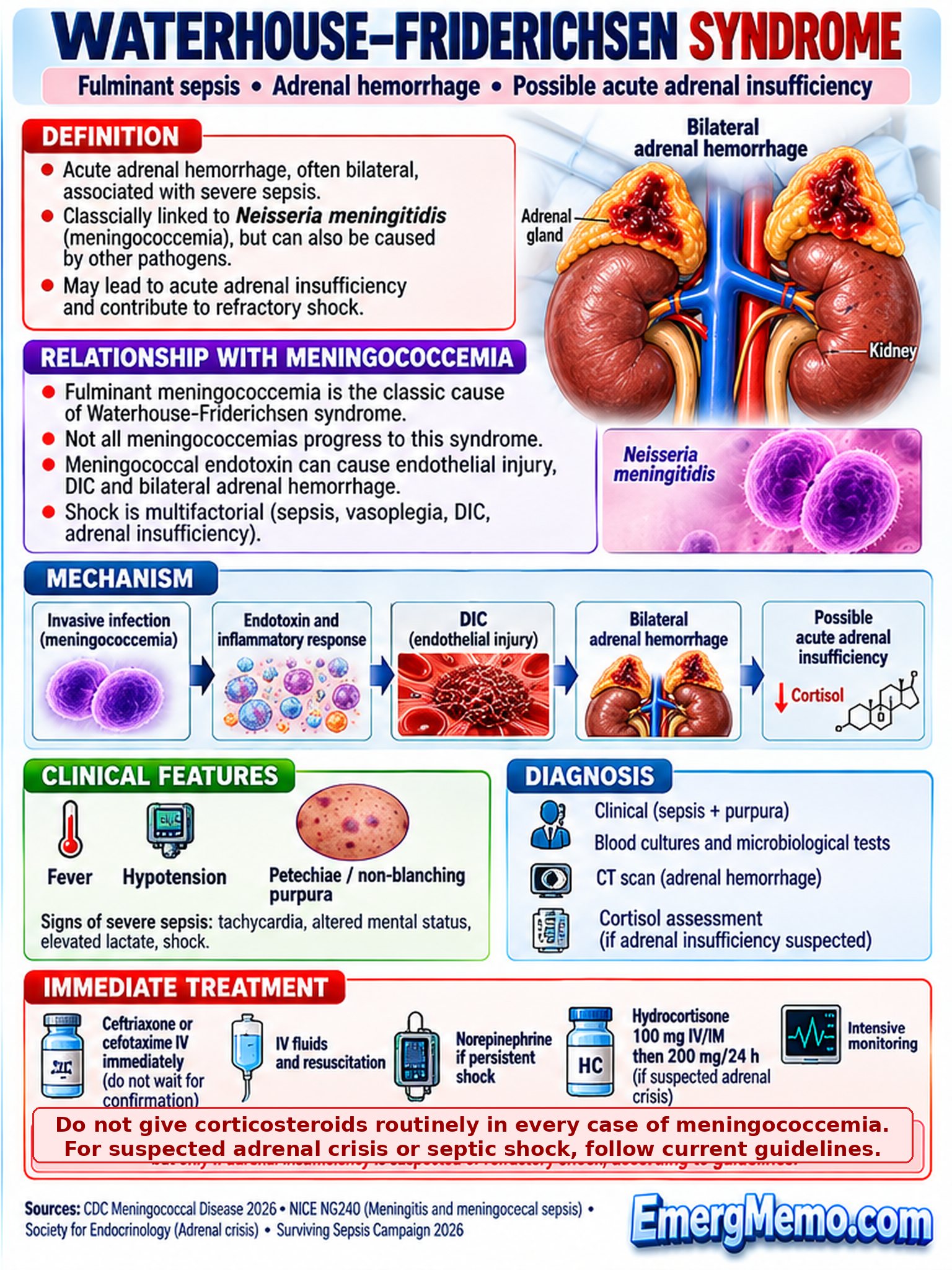
Complete clinical infographic | Free access. Waterhouse–Friderichsen syndrome in adults: pathophysiology, relationship with meningococcemia, clinical features, diagnosis and emergency treatment.
Versione italiana: Sindrome di Waterhouse–Friderichsen e meningococcemia.
Relationship with meningococcemia
Fulminant meningococcemia caused by Neisseria meningitidis is the classic cause of Waterhouse–Friderichsen syndrome, although the syndrome can occur with other severe infections. Not all cases of meningococcemia lead to adrenal hemorrhage. Meningococcal endotoxin and the host response trigger systemic inflammation, endothelial injury and possible disseminated intravascular coagulation (DIC), promoting often bilateral adrenal hemorrhage and possible acute adrenal insufficiency. Shock is multifactorial.
Clinical suspicion and confirmation
- Fever, rapid deterioration, hypotension/shock, petechiae or a non-blanching purpuric rash: warning signs of invasive meningococcal disease, not a specific diagnostic triad for Waterhouse–Friderichsen syndrome.
- Obtain blood cultures and microbiological samples if doing so does not delay antibiotics. Monitor lactate, full blood count, coagulation, electrolytes and glucose.
- Abdominal CT may demonstrate adrenal hemorrhage, but should only be performed when clinically appropriate and must not delay resuscitation or treatment. Cortisol/ACTH sampling, if feasible, must not delay hydrocortisone when an adrenal crisis is suspected.
Emergency management — adults
- Give IV ceftriaxone immediately (or cefotaxime according to clinical context and local protocols), without waiting for microbiological confirmation.
- Administer IV crystalloids with frequent reassessment of perfusion and hemodynamics; use norepinephrine as the first-line vasopressor in septic shock.
- If adrenal crisis is suspected: hydrocortisone 100 mg IV/IM immediately, followed by 200 mg over 24 hours (continuous infusion or 50 mg every 6 hours). Do not delay treatment for laboratory results.
- Do not routinely administer corticosteroids to every patient with meningococcemia: distinguish indications for adrenal crisis from those for septic shock under the 2026 Surviving Sepsis Campaign guidance. Arrange critical care support.
Scientific references
- CDC, Clinical Guidance for Meningococcal Disease (2026)
- NICE NG240 (2024)
- Society for Endocrinology, Adrenal Crisis
- Surviving Sepsis Campaign (2026)
- NCBI MedGen, Waterhouse–Friderichsen syndrome
EmergMemo.com educational content developed with AI assistance and checked against the cited sources. Does not replace clinical judgment or local protocols. Version: 28 October 2026.