

Versione italiana — serie completa in quattro tavole
Complete free four-plate series for adults. From causes and symptoms to assessment, treatment and safe disposition. For emergency clinicians and healthcare professionals.
Carousel · 4 slides — Swipe horizontally. Tap a slide to view the full-size image.

Tap any image to open it at full resolution.
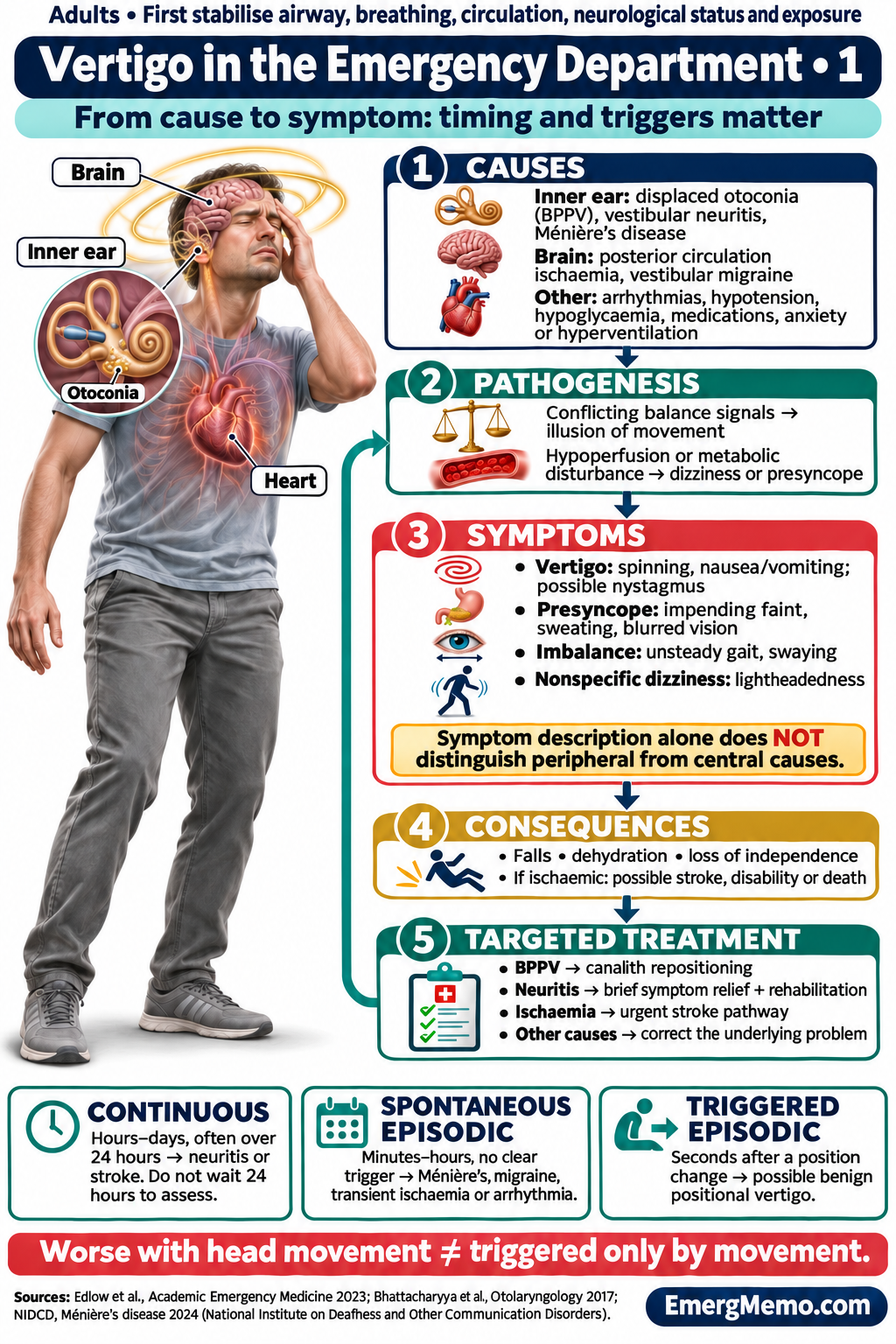
- 1. Causes, pathogenesis and symptoms
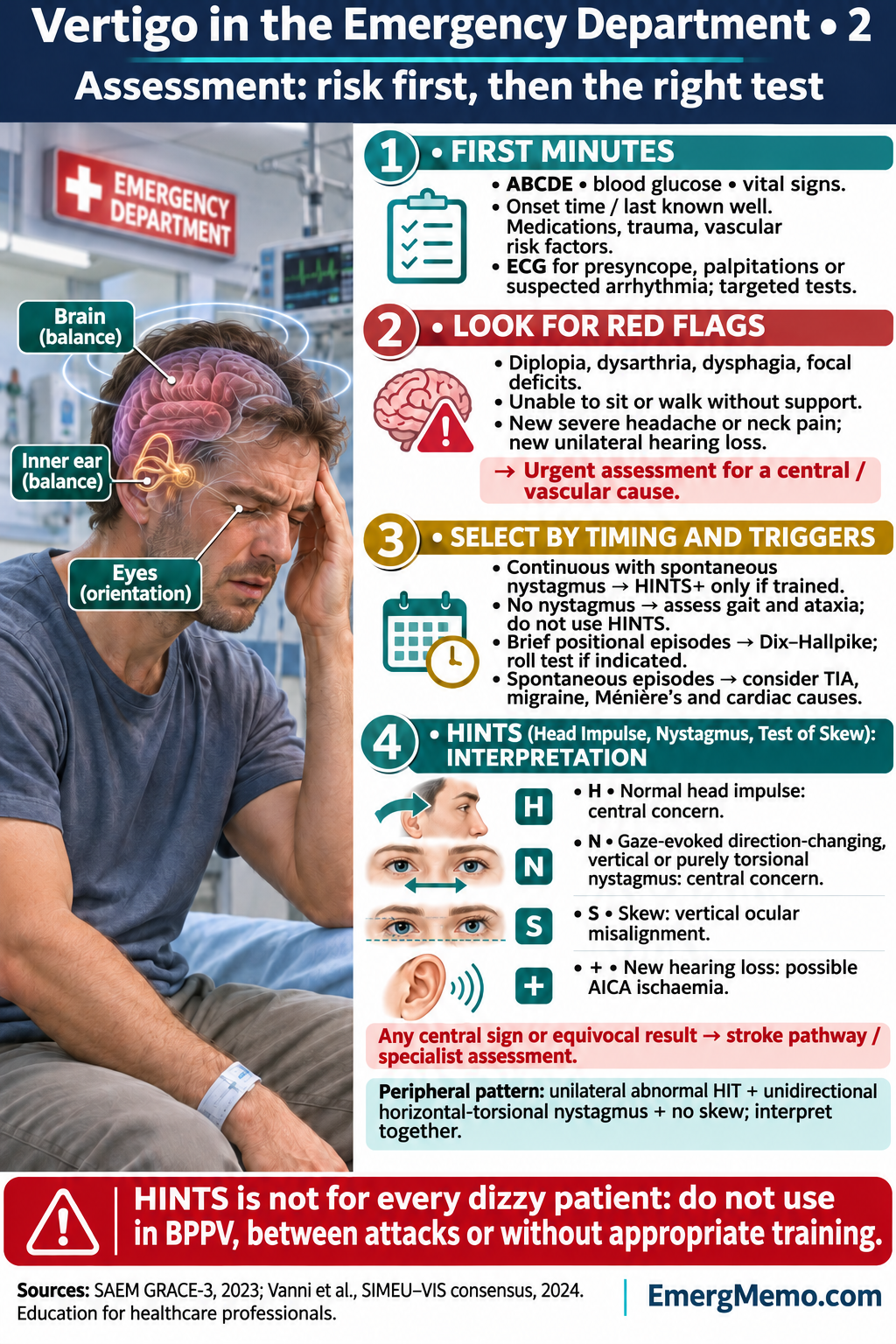
- 2. Assessment, red flags and HINTS+
- 3. Diagnosis, cause-specific treatment and disposition
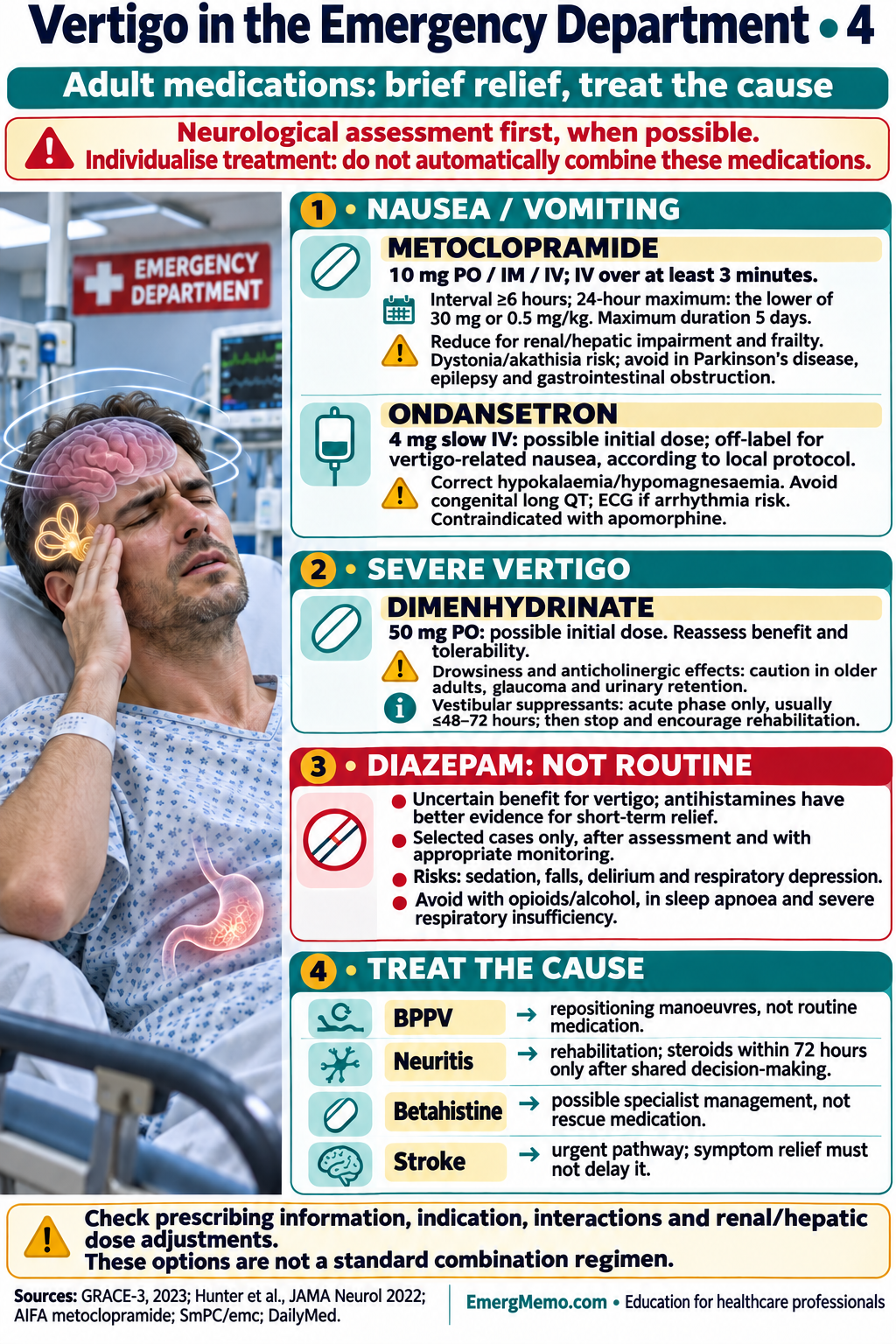
- 4. Adult medications: initial doses and precautions
1. Causes, pathogenesis and symptoms
2. Assessment, red flags and HINTS+
3. Diagnosis, cause-specific treatment and disposition
4. Adult medications: initial doses and precautions
Essential clinical notes
- Timing and triggers. Head movement can worsen continuous central vertigo too. In BPPV, displaced otoconia—not their normal presence—cause abnormal stimulation. Subjective versus objective vertigo does not reliably distinguish central from peripheral disease.
- HINTS/HINTS+. Use only in a currently symptomatic patient with continuous acute vestibular syndrome and spontaneous nystagmus, and only with specific training. HIT means head impulse test; AICA means anterior inferior cerebellar artery. An abnormal HIT alone does not exclude stroke. New hearing loss or other concerning findings override an apparently peripheral pattern. An unreliable examination or lack of training requires specialist assessment and imaging guided by the clinical picture.
- Imaging and stroke pathways. CT/CTA are not routine tests for all isolated vertigo but are urgent when stroke, vascular occlusion or dissection is suspected. A negative result, including early MRI, does not settle a clinically suspicious case. Agree on reassessment, observation and possible repeat MRI with the specialist.
- Medications. PO = oral; IM = intramuscular; IV = intravenous. The doses shown are initial adult examples, not an individual prescription or a combination regimen. For IV ondansetron, follow product/local administration guidance (at least 30 seconds; often 2–5 minutes). Dose and repeat administration depend on response, age, comorbidity and hepatic function. Licensed indications for ondansetron and dimenhydrinate vary by country and product: check local prescribing information and any off-label use.
- Metoclopramide. Keep at least 6 hours between doses, even after vomiting. Adjust for renal/hepatic function. Additional contraindications include gastrointestinal haemorrhage/perforation, phaeochromocytoma and concomitant levodopa or dopamine agonists. Consider QT, bradycardia and electrolyte abnormalities, especially with IV administration.
- After the acute phase. Minimise vestibular suppressants; prolonged use can impair compensation and increase falls. Avoid driving or hazardous activities while dizzy or sedated. Steroids for vestibular neuritis are an option with uncertain evidence, not a requirement. Betahistine may have a specialist maintenance role, not a rescue role.
Sources and further reading
- SAEM – GRACE-3 (2023)
- Vanni et al. – SIMEU–VIS consensus (2024)
- AAO-HNS – BPPV guideline (2017)
- NIDCD – Ménière’s disease (2024)
- Hunter et al. – Antihistamines and benzodiazepines, JAMA Neurology (2022)
- AIFA – Metoclopramide: dose and duration
- Metoclopramide – SmPC
- Ondansetron – SmPC
- Diazepam – SmPC
- Dimenhydrinate – DailyMed
- APTA – Vestibular rehabilitation guideline (2022)
- AAO-HNS – Ménière’s disease guideline (2020)
Content and illustrations prepared with AI assistance and checking of the sources listed, 2 November 2026. Educational material: it does not replace clinical assessment, practical training, prescribing information or local protocols. Illustrations are schematic, not diagnostic images of real patients.
#EmergMemo #Vertigo #EmergencyMedicine #Neurology #HINTS #BPPV #MedEd