
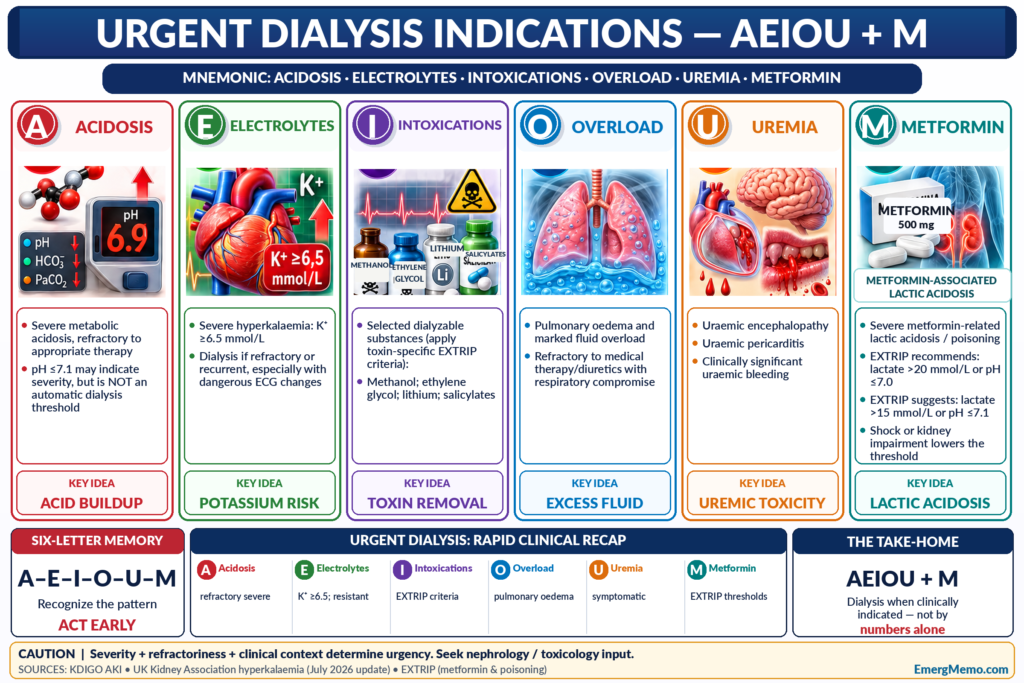
AEIOU + M is a clinical mnemonic for the major emergencies that may require urgent kidney replacement therapy (KRT/RRT) or extracorporeal toxin removal. The decision depends on clinical severity, trends and response to treatment—not isolated laboratory thresholds.
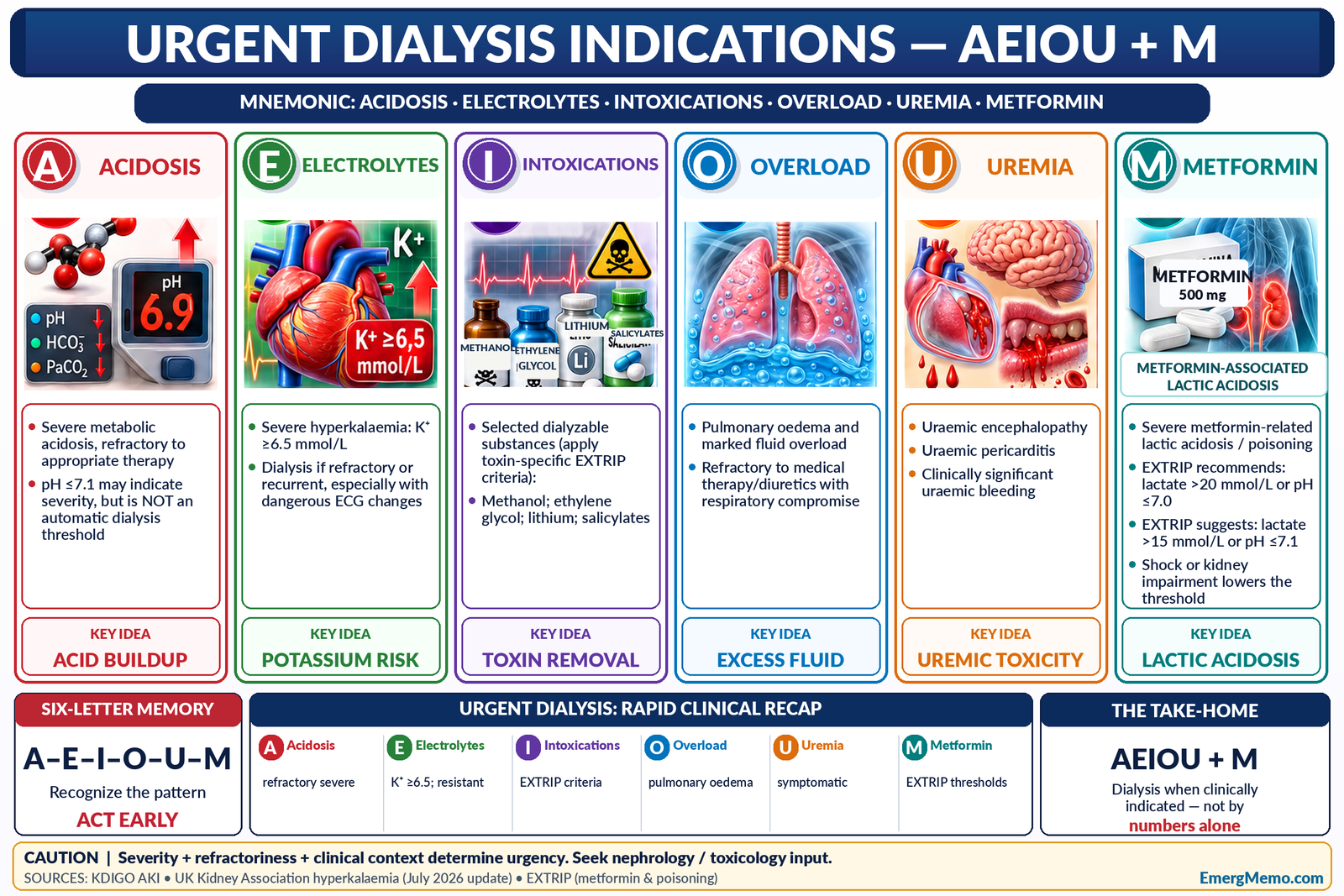
AEIOU + M: the six indications
- A — Acidosis: severe metabolic acidosis refractory to appropriate treatment. A pH around 7.1 or lower signals severity but is not a universal stand-alone dialysis trigger.
- E — Electrolytes: particularly severe hyperkalaemia (K⁺ ≥6.5 mmol/L), when refractory/recurrent or accompanied by threatening ECG abnormalities. Begin immediate stabilizing treatment when indicated.
- I — Intoxications: selected toxins may require extracorporeal treatment, including methanol, ethylene glycol, lithium and salicylates. Apply substance-specific EXTRIP criteria.
- O — Overload: pulmonary oedema/fluid overload causing respiratory compromise that cannot be adequately controlled with medical treatment or diuretics.
- U — Uremia: severe symptomatic complications such as uraemic encephalopathy, uraemic pericarditis and clinically significant uraemic bleeding.
- M — Metformin: for severe metformin poisoning or metformin-associated lactic acidosis, EXTRIP recommends extracorporeal treatment when lactate >20 mmol/L, pH ≤7.0 or conventional supportive measures fail; it suggests treatment at lactate >15 mmol/L or pH ≤7.1. Shock, impaired kidney function, liver failure and reduced consciousness may lower the threshold. Taking metformin alone does not justify dialysis.
Clinical caveat: This mnemonic aids rapid recognition and is not an automatic dialysis algorithm. Individualize decisions with nephrology, critical care and clinical toxicology as appropriate; follow local protocols.
Evidence and sources
- KDIGO — Acute Kidney Injury guideline and 2026 update status.
- UK Kidney Association — Management of Hyperkalaemia in Adults (July 2026 update).
- EXTRIP Workgroup — Metformin, indications for extracorporeal treatment.
- EXTRIP Workgroup — extracorporeal treatment guidance for poisonings.
EmergMemo.com · Professional educational material developed with AI assistance. Confirm patient-specific indications and current local guidelines.