
Versione italiana — quattro tavole
Free four-plate educational series for adult emergency and critical care. Causes, mechanisms, clinical recognition, management, treatment, prognosis and recovery.
Tap each image to open the full-resolution version.
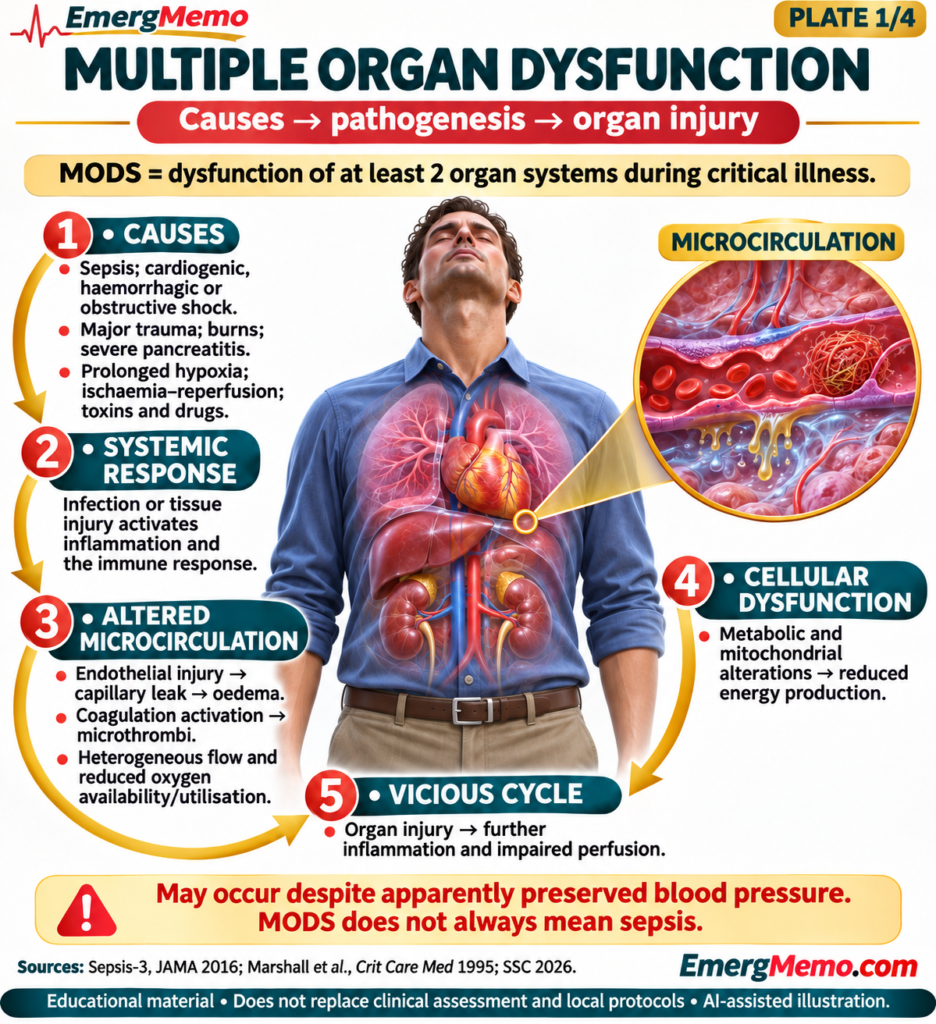
1. Causes and pathogenesis
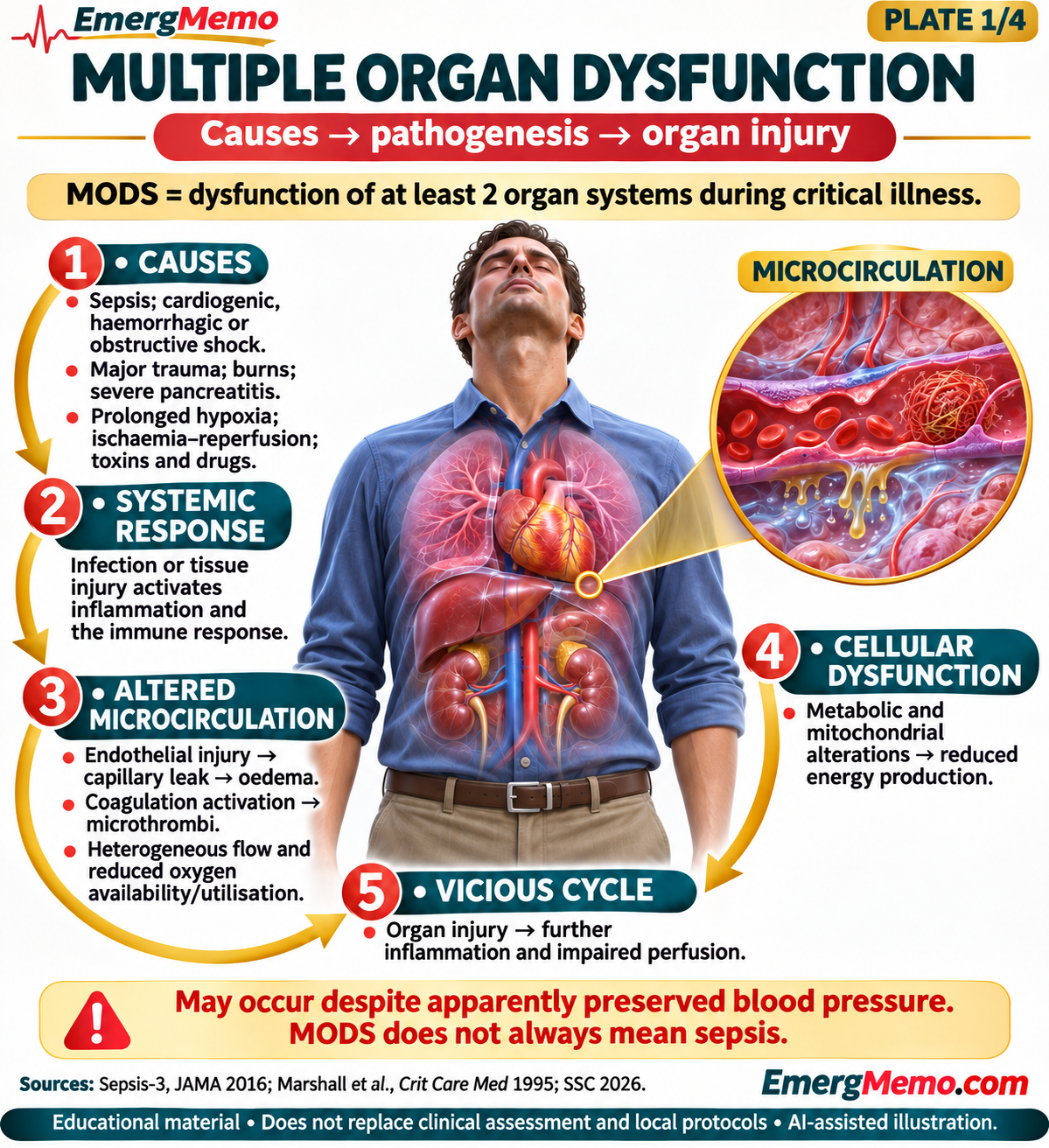
2. Clinical signs and early recognition
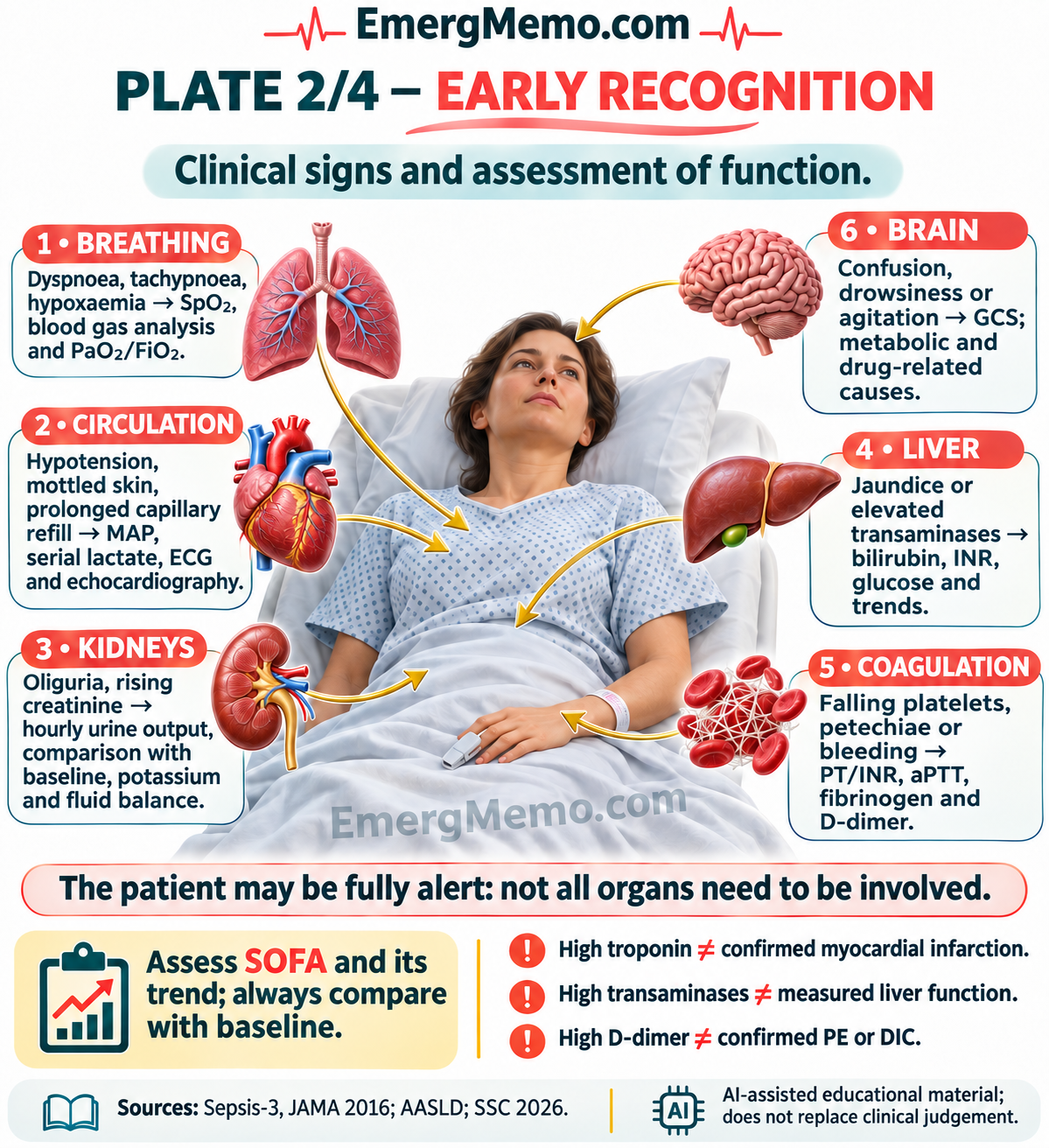
3. Management and treatment
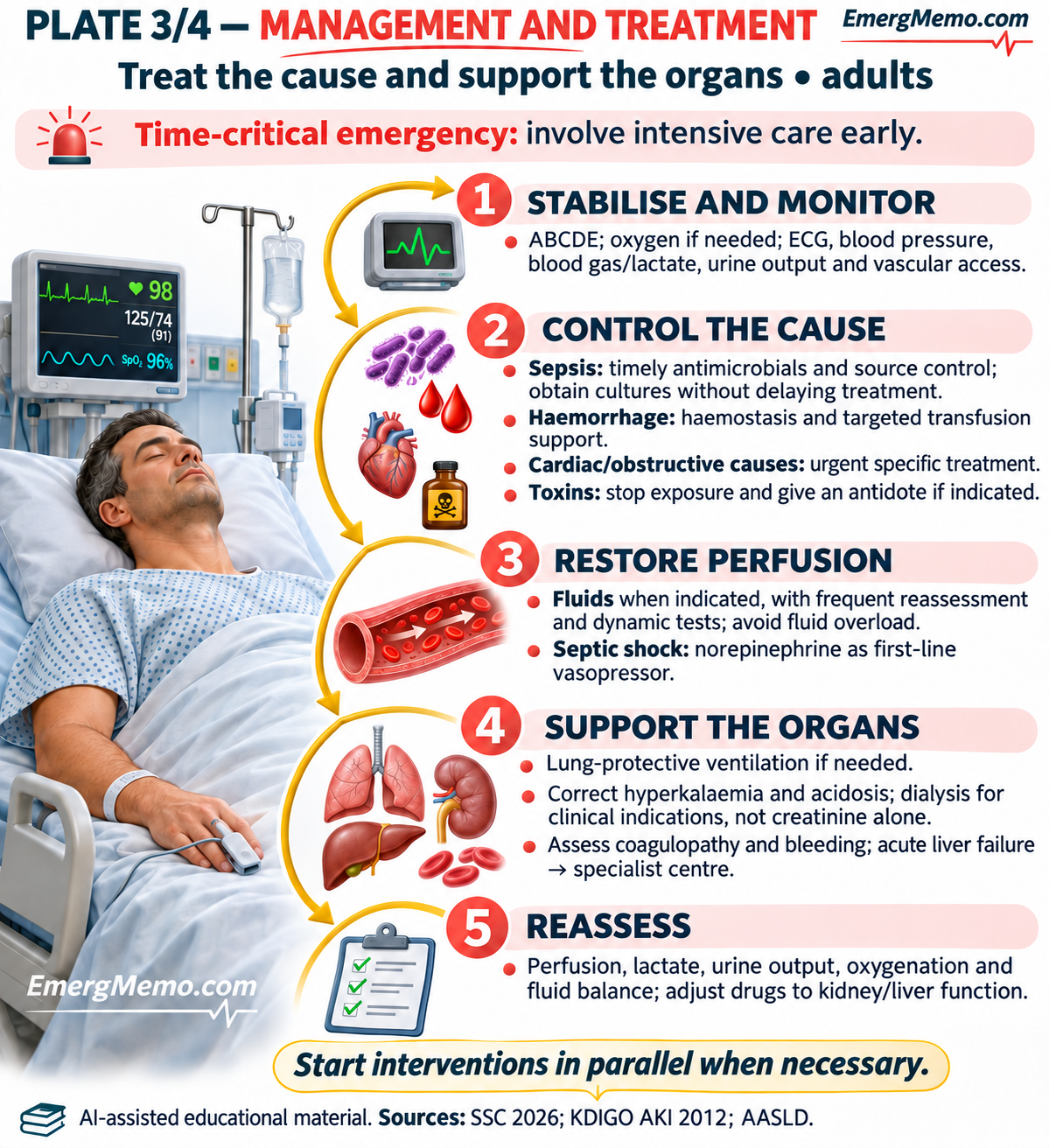
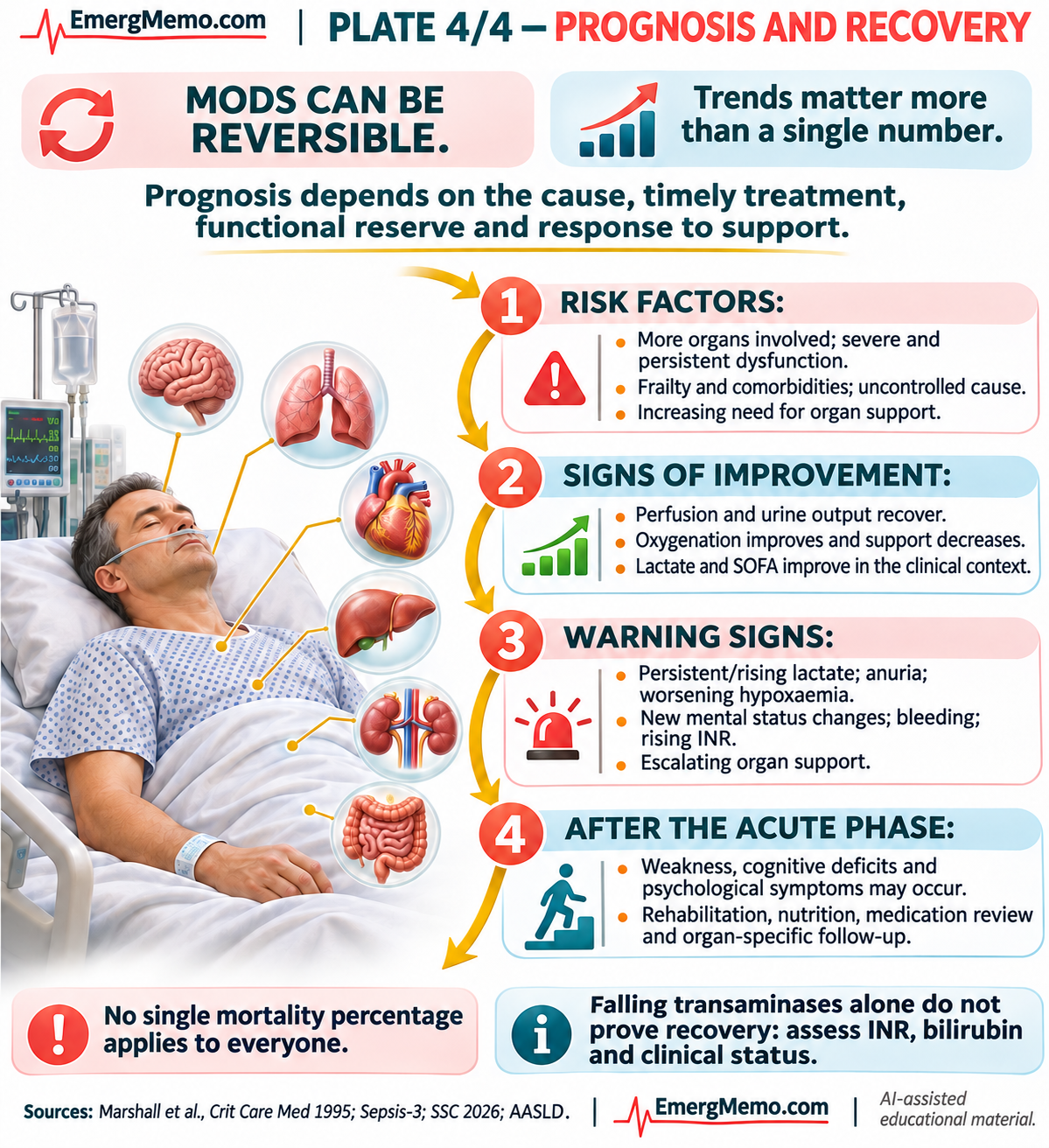
4. Prognosis and recovery
Clinical notes
- MODS describes dysfunction of at least two organ systems in critical illness. Distinguish acute change from chronic dysfunction; an alert patient can still have severe MODS.
- SOFA (Sequential Organ Failure Assessment) assesses respiratory, coagulation, hepatic, cardiovascular, neurological and renal dysfunction. Trends support clinical assessment; SOFA is not a stand-alone diagnostic or treatment rule. Sepsis requires organ dysfunction attributable to infection.
- Elevated transaminases indicate injury. Acute liver failure generally requires coagulopathy (INR ≥1.5) and hepatic encephalopathy without pre-existing cirrhosis; urgent specialist assessment may be needed before all criteria are met.
- D-dimer does not confirm pulmonary embolism or disseminated intravascular coagulation (DIC); troponin does not establish myocardial infarction without the appropriate clinical, ECG/imaging and serial biomarker assessment.
- Fluid and vasoactive treatment depend on the cause and haemodynamic assessment. Reassess response and congestion; do not give fluids simply to normalise lactate. Life-threatening electrolyte, acid–base or fluid abnormalities can require urgent renal replacement therapy.
- Treat the precipitating cause and provide organ support in parallel. Follow local protocols and reassess drug doses, nutrition, thromboprophylaxis and rehabilitation as clinically appropriate.
Sources and further reading
- Sepsis-3 — JAMA 2016
- Surviving Sepsis Campaign — 2026
- KDIGO — Acute Kidney Injury 2012
- AASLD — Acute Liver Failure
- Marshall et al. — Multiple organ dysfunction score, 1995
Content and illustrations prepared with AI assistance. Educational material for healthcare professionals; does not replace individual assessment, specialist training or local protocols. Illustrations are schematic. Reviewed 4 November 2026.
#EmergMemo #MODS #CriticalCare #EmergencyMedicine #OrganDysfunction #Shock #MedEd