

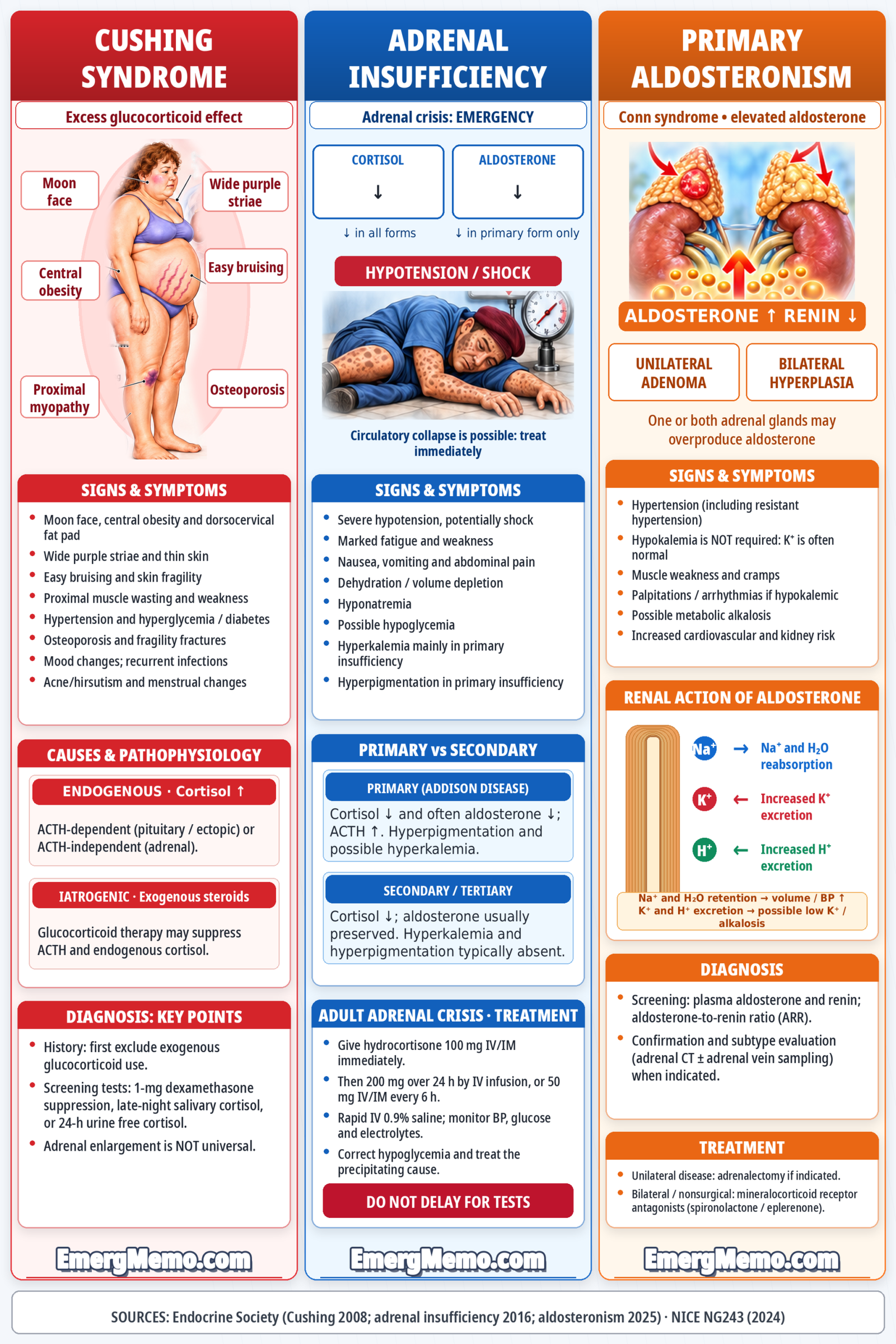
Complete three-column clinical comparison: Cushing syndrome, adrenal insufficiency/adrenal crisis and primary aldosteronism (Conn syndrome). The renal mechanism and the clinical findings of Conn syndrome are integrated into the third column.
Open the high-resolution infographic.
Clinical corrections and clarifications
Cushing syndrome: endogenous cortisol excess differs from iatrogenic Cushing syndrome due to exogenous glucocorticoids, in which endogenous cortisol may be suppressed. Adrenal enlargement is not a universal finding.
Adrenal crisis: aldosterone is generally preserved in secondary/tertiary insufficiency. In adults with suspected crisis, give hydrocortisone 100 mg IV/IM immediately, followed by 200 mg/24 h IV or 50 mg every 6 h, with fluid resuscitation and monitoring. Do not delay treatment for laboratory tests.
Primary aldosteronism: aldosterone excess may be unilateral or bilateral. Hypokalemia is not required and is frequently absent. Evaluation starts with aldosterone, renin and the aldosterone-to-renin ratio, followed by subtype workup when indicated.
Scientific references
- Endocrine Society, Primary Aldosteronism (2025)
- Endocrine Society, Primary Adrenal Insufficiency (2016)
- NICE NG243, Adrenal Insufficiency (2024)
- Endocrine Society, Diagnosis of Cushing’s Syndrome (2008)
- ESE/Endocrine Society, Glucocorticoid-induced Adrenal Insufficiency (2024)
Educational material for healthcare professionals, created with AI assistance and reviewed against clinical guidance. Apply individual clinical judgment and local protocols; this infographic does not replace clinical guidelines.