
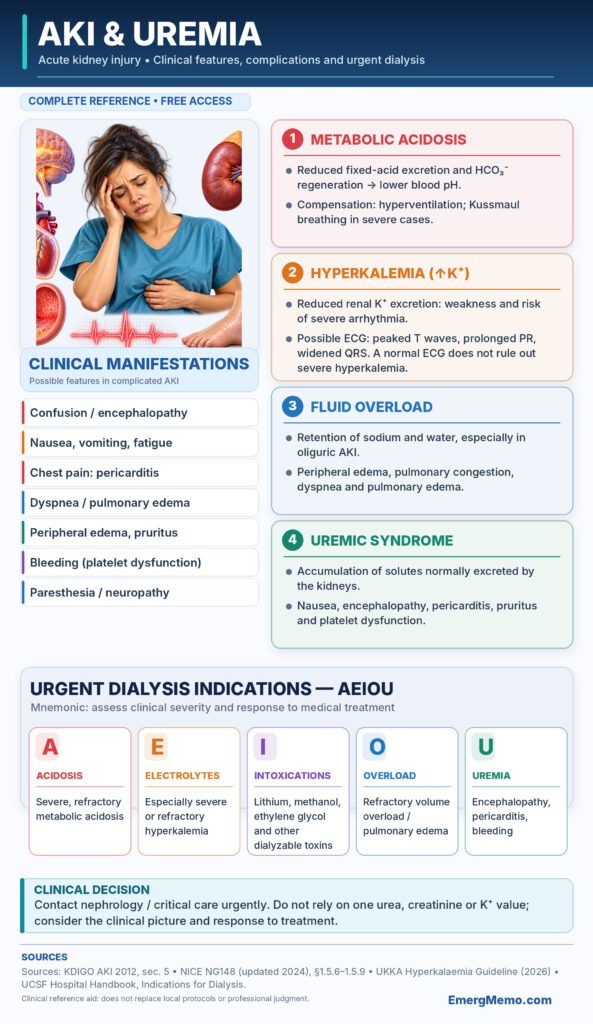
Acute kidney injury (AKI) and uremia: a complete illustrated clinical reference for ED and acute-care professionals. AKI may cause acid–base, electrolyte and fluid imbalance; clinical uremia is a syndrome associated with marked retention of solutes and does not occur in every case of AKI.
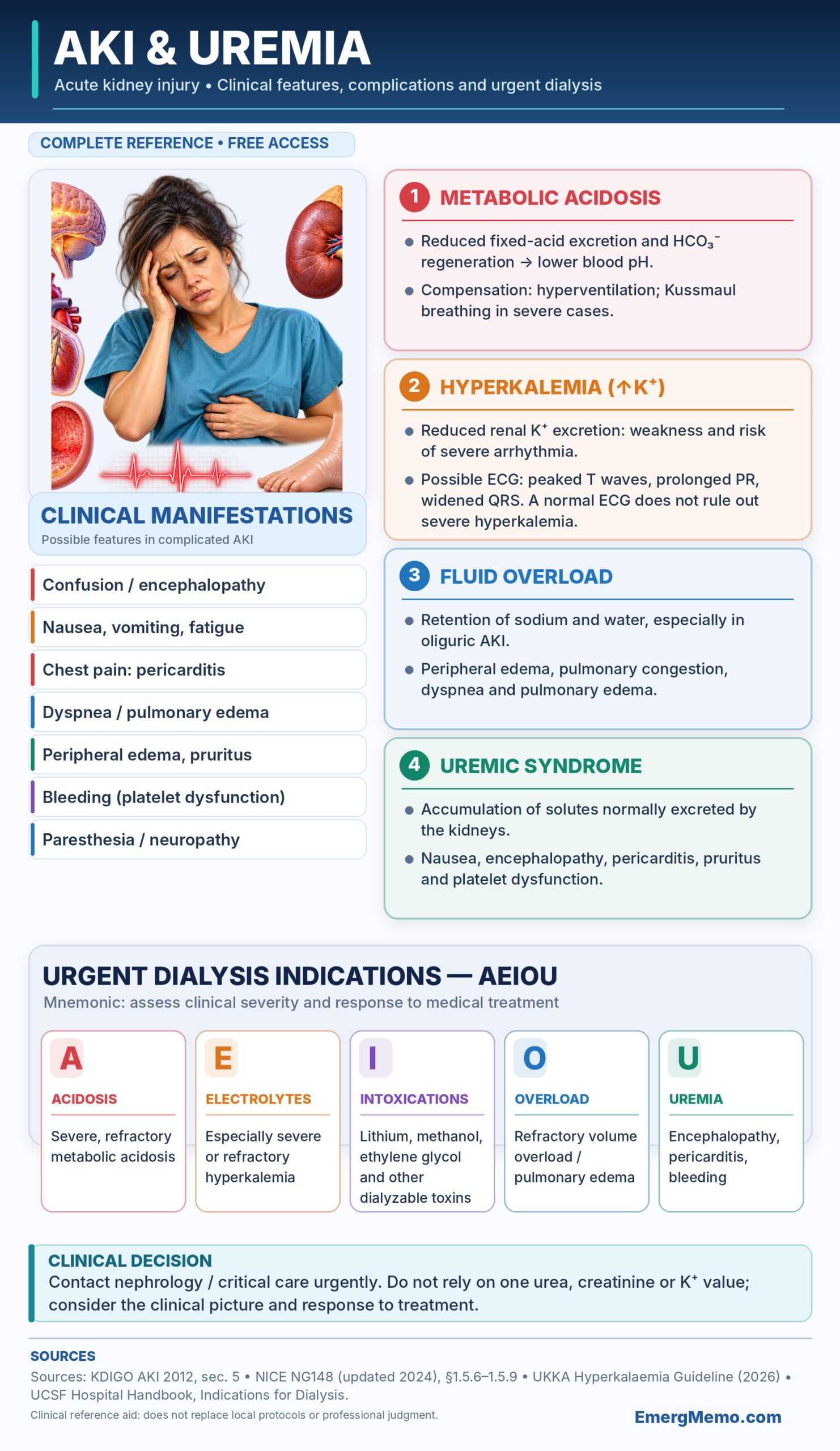
Open the full-size English infographic.
Four major complications
1. Metabolic acidosis. Impaired excretion of nonvolatile acids and impaired bicarbonate regeneration can lower blood pH. Respiratory compensation causes hyperventilation; Kussmaul breathing may occur in severe cases.
2. Hyperkalemia. Reduced renal potassium excretion may result in muscle weakness and life-threatening arrhythmias. ECG changes can include peaked T waves, PR prolongation and QRS widening, but a normal ECG does not exclude severe hyperkalemia.
3. Fluid overload. Sodium and water retention, particularly with oliguria, can cause peripheral edema, pulmonary congestion, dyspnea and pulmonary edema.
4. Uremic syndrome. Manifestations can include nausea, vomiting, fatigue, pruritus, confusion/encephalopathy, pericarditis and platelet dysfunction with clinically relevant bleeding. Neuropathy is more likely in prolonged disease.
Urgent dialysis: AEIOU
A — Acidosis: severe, refractory metabolic acidosis. E — Electrolytes: especially life-threatening or refractory hyperkalemia. I — Intoxications: severe poisoning with dialyzable agents (e.g., lithium, methanol, ethylene glycol), subject to toxicology criteria. O — Overload: refractory volume overload or pulmonary edema. U — Uremia: clinically significant manifestations including encephalopathy, pericarditis or bleeding.
Clinical priority: discuss potential renal replacement therapy immediately with nephrology and/or critical care. Decisions depend on the whole clinical picture, trends and response to treatment; do not use a single urea, creatinine or potassium cutoff in isolation.
References and guideline status
KDIGO acute kidney injury guidance (published AKI guideline, 2012; revised 2026 draft under review at time of publication); NICE NG148, §§1.5.6–1.5.9 (updated October 2024); UK Kidney Association hyperkalemia guidance (2026 update); UCSF Hospital Handbook: Indications for Dialysis.
For healthcare professional education. Artwork and layout created with AI assistance and clinical editorial review. Local protocols and bedside clinical judgment take precedence.