
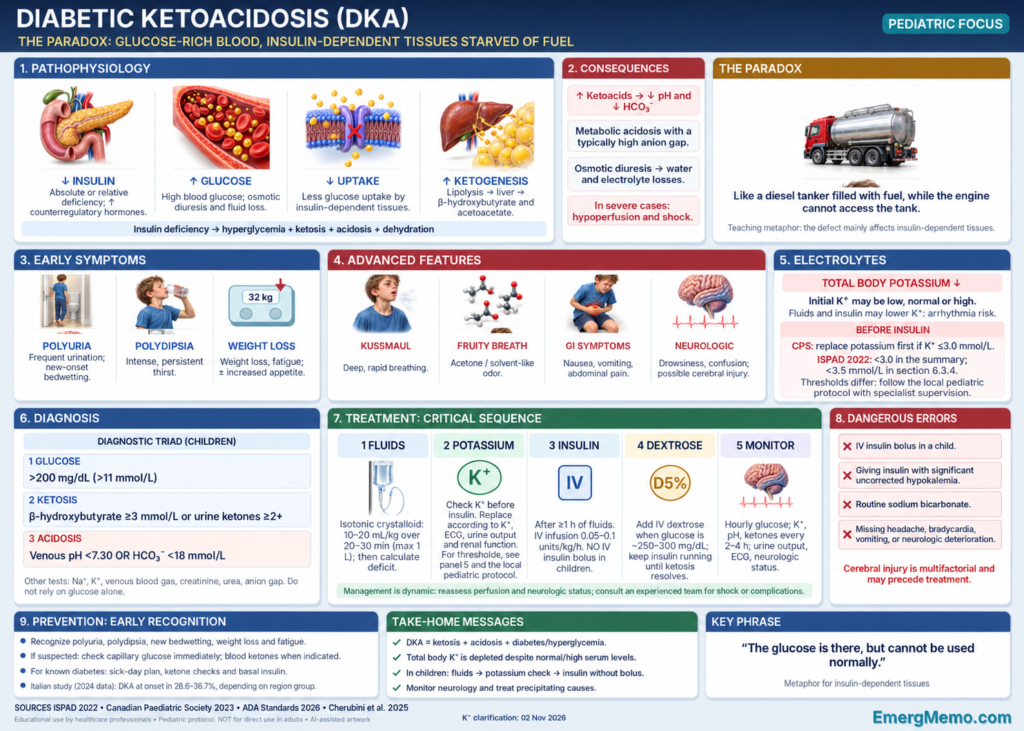
Updated pediatric infographic — free access. Pathophysiology, early and advanced symptoms, diagnostic tests, electrolytes, treatment, complications and errors to avoid. The original nine-section structure and fuel-tanker analogy are retained. Editorial clarification, 2 November 2026: CPS and ISPAD potassium thresholds are attributed separately in panels 5 and 7 and paragraph 4. This is not a new guideline or an official corrigendum.
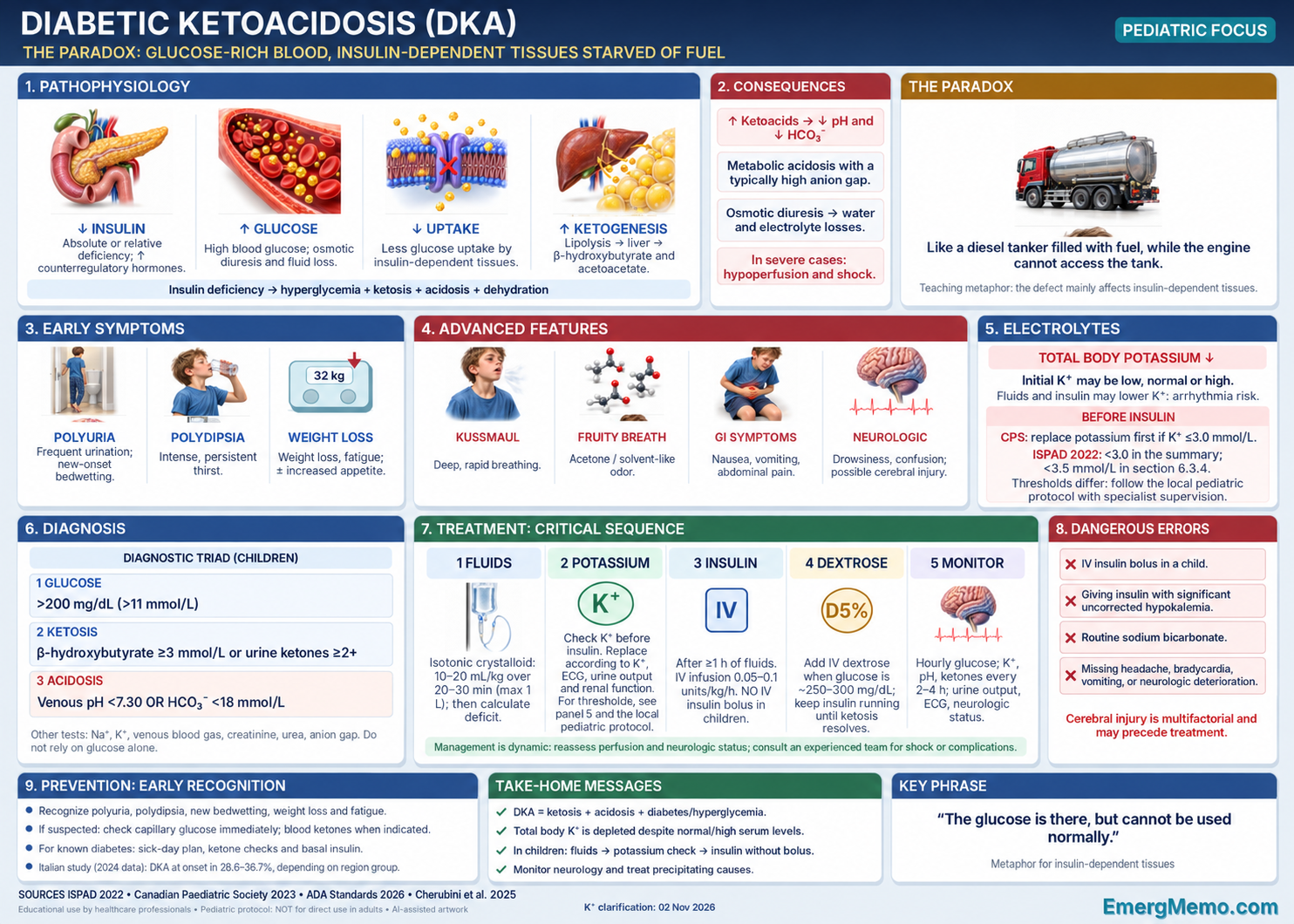
Open the complete English infographic updated 2 November 2026. Versione italiana completa.
1. Pathophysiology and the meaning of the paradox
DKA results from absolute or relative insulin deficiency accompanied by increased counterregulatory hormones: hyperglycemia, osmotic diuresis, water and electrolyte depletion, lipolysis and hepatic ketogenesis. The principal ketoacids are β-hydroxybutyrate and acetoacetate; acetone contributes to fruity breath. Glucose entry is not blocked in all cells: uptake mainly falls in insulin-dependent tissues. Destruction of pancreatic beta cells is not a prerequisite for every DKA episode.
2. Diagnosis: all three components
- In children, generally glucose >200 mg/dL (>11 mmol/L).
- Blood β-hydroxybutyrate ≥3 mmol/L, or moderate/large urine ketones when blood testing is unavailable.
- Venous pH <7.30 OR bicarbonate <18 mmol/L: either abnormal value meets the acidosis component. Anion gap is usually increased but does not replace the diagnostic triad.
- Blood β-hydroxybutyrate testing is preferable to urine strips for diagnosis and monitoring. Be alert to DKA with less marked hyperglycemia in special situations (e.g. SGLT2 inhibitor use, more typical in adults).
3. Clinical progression
Early findings include polyuria, new-onset bedwetting, polydipsia, weight loss and fatigue, with or without increased appetite. Progression may cause Kussmaul respirations, fruity breath, nausea/vomiting, abdominal pain, dehydration and altered consciousness. Severe hypoperfusion or shock is possible but not inevitable.
4. Potassium: whole-body deficit and treatment risk
Total body potassium is depleted, while the initial serum value can be low, normal or high. Insulin and correction of acidosis shift potassium back into cells, sometimes causing hypokalemia. Check K⁺ before insulin. CPS advises potassium replacement first if K⁺ ≤3.0 mmol/L. ISPAD 2022 states <3.0 in its summary (p. 836) and <3.5 mmol/L in section 6.3.4 (p. 843): do not attribute a single shared threshold to both sources. At K⁺ 3.1–3.4 mmol/L, this chart must not be interpreted as automatic clearance to start insulin: follow the local pediatric protocol with specialist supervision. Replacement and infusion rate depend on K⁺, ECG, urine output and renal function.
5. Pediatric treatment sequence
- Fluids first: 10–20 mL/kg isotonic crystalloid over the first 20–30 minutes (maximum 1,000 mL), followed by reassessment and calculated maintenance/deficit replacement. Individualize shock management with critical-care support.
- Potassium: obtain a level before insulin and supplement according to the level and urine output, following the local protocol.
- Insulin: continuous IV infusion at 0.05–0.1 units/kg/h, starting at least one hour after fluid therapy begins; avoid IV insulin boluses in children.
- Dextrose: add to IV fluids as glucose falls toward 250–300 mg/dL, adjusting therapy so insulin continues until ketones resolve.
- Monitoring: hourly glucose, frequent electrolytes/β-hydroxybutyrate/blood gases (typically every 2–4 hours), urine output, ECG when needed, and repeated neurologic checks. Address precipitating factors.
6. Dangerous errors and cerebral injury
Avoid IV insulin boluses, insulin administration with significant uncorrected hypokalemia, routine bicarbonate and missed progressive headache, vomiting, bradycardia or worsening consciousness. Pediatric DKA-related cerebral injury is multifactorial and may be present before treatment begins. If suspected, activate the emergency management pathway without waiting for CT.
7. Early recognition: Italian data
An Italian study published in 2025 reporting 2024 data found DKA at diabetes onset in 28.6% of cases in regions participating in the pilot screening program and 36.7% in other participating regions. These are figures for the study groups, not a single national estimate. Early bedside glucose testing in symptomatic children can support timely diagnosis.
Scientific references
- ISPAD Clinical Practice Consensus Guidelines 2022, chapter 11: pediatric DKA and HHS (Pediatr Diabetes. 2022;23:835–856).
- Canadian Paediatric Society. Current recommendations for management of paediatric DKA. Paediatr Child Health. 2023;28:128–132.
- American Diabetes Association: Standards of Care in Diabetes 2026, section 16 (adult criteria and euglycemic DKA; not a pediatric treatment protocol).
- Cherubini V. et al., Diabetes Obes Metab. 2025;27:6039–6043: Italian 2023–2024 pediatric DKA-at-onset data.
Educational material for healthcare professionals, with AI-assisted illustrations and clinically checked statements. Infusion and insulin recommendations here are pediatric and must not be applied directly to adults. Follow updated guidelines and local protocols.